
The Structural Roots of Pakistan’s Economic Problems; Tax, Debt & Circular Debt Crisis

Writer: Manahil Aftab (SESA Leader)
Pakistan is home to over 250 million people, with a service sector that currently produces more than half of its output, and an agricultural basis that still employs more people than any other industry. However, Pakistan’s public debt has fluctuated from approximately 47 and 80 percent of GDP depending on the year, its currency has declined and its government has frequently turned to the IMF for assistance over the course of the previous 20 years as it has moved from one fiscal crisis to the next.
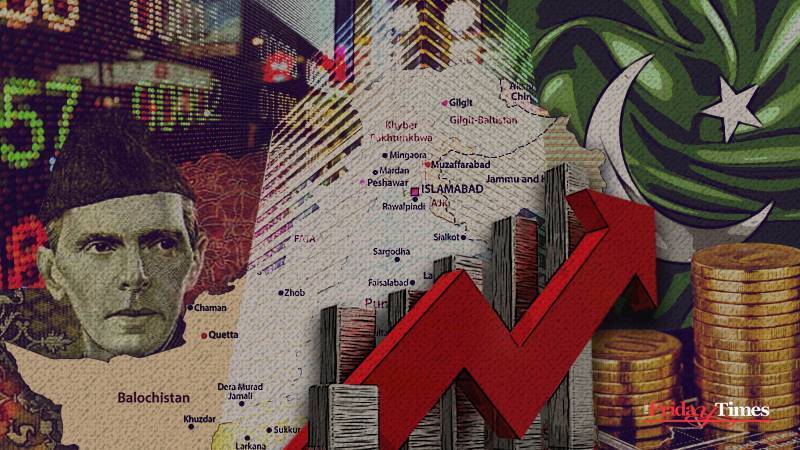
Pakistan closed fiscal year 2025-26 collected almost Rs. 13 trillion in taxes which is a genuine improvement over prior years. Still it is nearly Rs. 978 billion short of the original target, even after the IMF agreed to lower it twice. Over the same time period, central government’s debt increased by more than 9% to Rs. 81.93 trillion by April 2026. These are not the numbers of a country experiencing a single crisis rather they are the numbers of a country whose economic problems have become structurally linked, each one reinforcing the next.
Due to a limited tax base, the government is forced to borrow more than it should, which results in a debt burden that prevents productive spending. This financial burden makes it politically easier to continue delaying the one reform that is long overdue fixing the circular debt of the energy sector. The IMF’s 2025 diagnostic assessment names this pattern “elite capture”, meaning that public policy is shaped by narrow groups of politicians, military, landowners and industrialists at the expense of broader growth. It projects that fixing this could lift Pakistan’s GDP by 5 to 6.5 percent over five years. Understanding these three problems together, and the political logic that connects them, is a far more useful way to assess Pakistan’s current economic condition than treating each as a separate issue.
A Tax Base That Fails to Meet its Goals
A government needs revenue to pay salaries, service debt, and run hospitals and infrastructure, and it obtains this revenue via taxing economic activity: income, sales, imports and property. The “tax base” refers to the real source of activity recorded by the system. Pakistan’s problem is not a lack of economic activity, but a lack of activity that is taxed.
Two structural forces drive this, and both show up clearly in Pakistan’s data. First, a large informal economy. Dawn recorded Pakistan’s economy to be around $340 billion in 2023, compared to an estimated $457 billion informal economy of unregistered retail, construction, transportation, and small businesses, implying that more economic activity may take place outside of the legal system than within it. A recent labor force survey found over 72 percent of non-agricultural employment falls into this informal category. Secondly, a politically controlled sector: agriculture, which accounts for a major portion of real economic activity, was transferred to the provinces via the 18th Amendment, thus taxing it requires that provincial legislatures, who are frequently dominated by landowners, tax their own base. Provinces don’t only just avoid taxing agriculture to protect landowners but they also don’t want to give up power they were constitutionally given. So when federal government pushes them to tax it, especially under the IMF conditions, it looks less like “good policy” and more like the centre trying to regain the control.
What keeps this cycle alive isn’t just a weak enforcement but it’s the weak trust. When ordinary people see politically connected sectors getting tax breaks, then they also feel justified in avoiding tax. Compliance breaks down when people doubt two separate things at once that tax evaders will actually get caught which is weak enforcement and that their own contributions will be spent well which is weak accountability. Either doubt on its own is enough to weaken compliance. A narrow tax base means the government collects less money, which leaves public services like schools, roads, utilities, and courts underfunded. Weak public services, in turn, give citizens and small businesses little visible incentive to formalize, since registering a business or reporting income mainly invites more scrutiny without a clear return. That reluctance to formalize keeps the tax base narrow which starves public services further, completing the loop and starting it over again.
This is arguably the hardest of the three problems to fix quickly, because it isn’t a technical failure but it’s an incentive problem. When a government can’t raise enough through taxation, only one lever remains: borrowing.
A Debt Burden That Requires Borrowing
When a government spends more than it earns in revenue, it creates a budget deficit, which it fills by borrowing, either domestically by selling bonds and treasury to local banks and investors or externally through loans from other countries, the IMF, World Bank, and similar lenders.
Debt itself isn’t automatically a problem as plenty of stable economies carry debt comfortably. The real issue is debt servicing which is the interest owed every year just to keep existing debt current. When servicing consumes a large share of revenue, money that could go to schools, hospitals, or infrastructure goes instead to interest payments on money already spent. When revenue remains low, the government borrows to pay its spending, more debt equals more interest owed the next year and if revenue does not grow sufficiently, the government borrows again, partially to service the interest on existing debt.At that point, the borrowing is no longer for the purpose of construction; rather, it is to avoid default.
Pakistan is deep in exactly this dynamic. State Bank of Pakistan data shows central government debt reaching Rs. 81.93 trillion by April 2026, up from Rs. 74.94 trillion the previous year, representing an almost Rs. 7 trillion increase. The more troubling figure isn’t the size of the debt itself, but what it costs to carry, debt servicing has been estimated to absorb more than half of total government revenue in recent years. This is the debt cycle in miniature: low tax collection forces the government to borrow, and that borrowing comes with interest payments, so the money that could have gone toward fixing the real problems like public investment or subsidy reform, instead just goes toward paying off past debt.
Things have improved lately. Pakistan paid off $13 billion in domestic debt early over 14 months, and the central bank’s interest rate dropped from 22 to 10.5 percent, both easing pressure. However, this seems to be a temporary relief rather than a permanent solution. It largely depends on factors that can be easily reversed like reduced interest rates, one-time central bank incentives, and stable global conditions. A single shock, such as an increase in oil prices or a poor harvest, could undo this progress quickly, because the real problem of not collecting enough tax still hasn’t been solved. It all comes back to the tax problem, if Pakistan collected more tax, it wouldn’t need to borrow so much, and wouldn’t lose so much money to interest payments.
The Energy Sector’s Circular Debt
Circular debt is known as the long running cash flow problems in Pakistan’s power sector. The money is supposed to be flow in a sequence like; consumer pay distribution companies, the DISCOs pay power generation companies like IPPS, WAPDA, GENCOs, these pay to fuel and gas suppliers and then fuel suppliers pay refineries and importers. If any in this link doesn’t get paid, so the connection breaks down and the shortfall moves along instead of getting disappeared. It has been growing since 2006 and no government has managed to prevent it from reoccurring.
According to ADP report 2021, the circular debt raised from Rs.450 billion in Financial year 2013 to Rs.2.3 trillion by December 2020, which is approximately equal to 5.6% of Pakistan’s entire GDP and 6.8% of all government debt. The COVID-19 pandemic had a negative impact on consumer spending power, activity, and general economic conditions. According to CPPA-G predictions, during FY2019–FY2020, the COVID-19-related problems added PRs235 billion to the circular debt flow. Pakistan was supposed to keep circular debt below Rs. 1.614 trillion by June 2026 under its IMF deal, but it missed that target by around Rs. 300 billion. Officials blame K-Electric’s unpaid bills and weak performance from the DISCOs.
Following are the causes for this issue of circular debt:
There is always a gap between what individuals pay for power and what it truly costs as the government keeps consumer prices lower than what power companies charge.
Even when the prices should be adjusted to reflect the real costs, the government takes a long time of 9 to 11 months to officially approve the new rates. Due to this delay, power companies aren’t paid enough for a long period of time.
Electricity is lost in route to customers due to outdated wiring and equipment, and companies struggle to collect the bills they do send out. So even the electricity that IS isn’t always compensated for the electricity it uses.
The government claims to cover the gap between the actual cost of power and the lower price that consumers pay, but it often lacks enough money to do it completely and on time.
When there isn’t enough cash on hands, the system borrows money to fill the gap, but thus borrowing comes along with interests and penalty charges, which over time increases the overall deficit.
Transparency throughout the whole energy supply chain, from fuel purchase to final billing is necessary to permanently resolve circular debt. Performance data on production, transmission, and distribution businesses must be made public so that the public and Parliament may hold them responsible. It also requires professional, merit-based management free from political interference, empowered authorities, and wider use of technology like smart metering and digital billing to reduce losses. This problem has continued government after government for nearly two decades, because each year people blame small, individual issues instead of looking at the bigger cause behind them.
Circular debt is ultimately a mirror reflecting the quality of governance in Pakistan’s energy sector. Unless every gap across the supply chain is identified, exposed and permanently sealed, the debt will continue to circulate, regardless of tariff increases, IMF programs or financial restructuring. Pakistan does not suffer from a shortage of financial solutions. It suffers from a shortage of transparent governance, institutional accountability and the political courage to act on powerful interests.
Recommendations
The following are some practical recommendations to address each of the three problems discussed earlier, based on the Pakistan’s existing IMF-backed reforms:
Tax enforcement should shift towards data driven risk systems instead of manual audits chosen by officers. The FBRs IMF- backed reform plan, is already introducing a risk based audit system with mandatory digital invoicing to fix the harassment and unfairness problem that a ISSR 2019 report had already identified.
Provinces need to start collecting agricultural income tax. The IMF has warned that federal tax revenue will get stuck around 10 to 11% of GDP if provinces didn’t start collecting taxes on agriculture and services properly rather than leaving the burden entirely on federal.
FBR’s tax should be made legally binding instead of just idealistic goals. According to the IMF, they should be categorized as a “Quantitative Performance Criterion” representing a stricter category that would prevent the government from missing its target.
For debts issue, Pakistan needs a political charter of economy in which all the major political parties would agree on the same fiscal goals. In this way the debt reduction plans wouldn’t change or abandon each time with the change of governments.
Pakistan’s current IMF program requires to keep its budget in surplus by 2% of GDP. It needs to spend less than it’s earning. As it’s the fastest way to prevent debt from escalation.
For Circular debt problem, A Public Service Obligation (PSO) should be signed between the government and major state owned enterprises before the FY2027 budget. This would help in keeping the record of what exactly each subsidy costs the government and would address the hidden subsidy problem leading to unpaid bills.
Pakistan should take steps to bring its private companies into the weakest electricity Distribution Companies. The IMF has also set the deadline of December 2026 for Pakistan to complete the necessary conditions required in introducing private sectors to Hyderabad Electric Supply Company (HESCO) and Sukkur Electric Power Company (SEPCO), two of the worst performing distribution companies.
Conclusion
Pakistan’s economic problems are often listed separate from other. But the above analysis suggests that these three, tax shortfall, debt crisis and energy sector’s circular debt can be better understood as a single chain. Weak tax collection forces the government to borrow more than it should. This borrowing creates room for interest payments, leaving less-budget for any other area. And with less money, it becomes easier to keep delaying the energy sector fix even though that has been already planned more than once. The matter is not the absence of solutions as Pakistan’s economists, the IMF and one Ministry of Finance after another suggested almost the same fix for decades. What’s missing is actually to follow them rather than delaying. The IMF itself determined it as elite capture suggesting that it isn’t accidental but it’s the failure how the system works.
This doesn’t mean that these problems cannot be fixed by nature and Pakistan will be stuck forever. These were quite improved at various points in the past when real efforts were put in. So, the progress is possible. But looking honestly at the last 20 years, reforms only happen in Pakistan following a crisis or when it’s forced into it usually through IMF programs, not by choice. And once that pressure eases, progress tends to slow down again. That pattern is more worth paying attention to than simply hoping political will shows up on its own. It’s really the key question: will these three problems finally get solved together, or just keep getting patched up one at a time, like before?
References
ProPakistani, “FBR Misses Original IMF Tax Target By Rs. 978 Billion,” July 1, 2026.
https://propakistani.pk/2026/07/01/fbr-misses-original-imf-tax-target-by-rs-978-billion
Farhat Ali, “Pakistan’s circular debt isn’t a financial crisis,” Business Recorder, July 18, 2026. https://www.brecorder.com/news/40430575
pkrevenue.com, “Pakistan’s total debt reaches Rs82 trillion by April 2026,” April 2026. https://pkrevenue.com/pakistans-total-debt-reaches-82-trillion-april-2026/
Malik, A., “Circular Debt — An Unfortunate Misnomer,” PIDE Working Paper No. 2020:20, Pakistan Institute of Development Economics, 2020.
https://pide.org.pk/research/circular-debt-an-unfortunate-misnomer-2
Asian Development Bank, “Circular Debt Impact on Power Sector Investment,” Supplementary Linked Document, Energy Sector Reforms and Financial Sustainability Program (RRP PAK 53165-002), March 2021.
https://www.adb.org/sites/default/files/linked-documents/53165-002-ld-03.pdf
The Express Tribune, “Government debt climbs to Rs58tr,” 2026. https://tribune.com.pk/story/2612317/government-debt-climbs-to-rs58tr
Wikipedia, “Economy of Pakistan,” accessed July 2026. https://en.wikipedia.org/wiki/Economy_of_Pakistan
National Defense University (ISSRA), “Pakistan’s Economy: Challenges and Way Forward,” Post-Seminar Report, September 17, 2019.https://issra.pk/images/eventreports/2019/17-September-2019-Pakistan-Economy-Challenges-and-Way-Forward.pdf
ProPakistani, “Everything Pakistan Has Promised the IMF Until 2027,” May 15, 2026. https://propakistani.pk/2026/05/15/everything-pakistan-has-promised-the-imf-until-2027/
Profit — Pakistan Today, “IMF sets 11 new structural benchmarks for Pakistan, including tax reforms, asset disclosures,” December 12, 2025. https://profit.pakistantoday.com.pk/2025/12/12/imf-sets-11-new-structural-benchmarks-for-pakistan-including-tax-reforms-asset-disclosures/