

Malakand’s Tax Battle: A Timeline of Broken Promises and Provincial Pushback

Writer: Umar Khan (Director of Academic and Research at SESA)
Introduction
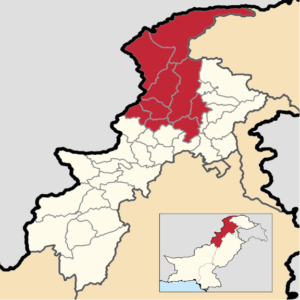
Malakand Division comprises of 10 districts i.e. Swat, Bar Swat, Shangla, Buner, Malakand, Dir Upper & Lower, Chitral Upper & Lower and Bajaur Tribal District with a total area of 32007 sq.Kms having population of 10 million as per census 2023. Formerly, the districts were princely states of Swat, Dir, Chitral and Malakand Protected Area (Malakand Agency). The States were merged in Pakistan by the Government of Pakistan in 1969 and were declared as Malakand Division. The area consists of snow-capped mountains, singing rivers, fruits laden orchards, flower decked slops and green meadows which attract tourists both at national as well as international level. It lies in the north of the Khyber Pakhtunkhwa touching Karakorum Highway at Be sham, Afghan border with Dir & Chitral and the strategic Wakhan strip is bordering Chitral. The mentioning of this area is found in the ancient Greek accounts & by other historians. It was a center of Aryan and later on rich Ghandhara civilizations before the Muslim rulers. Alexander the Great, king of the ancient Greek kingdom of Macedonia passed through this route to India in 327 B.C, attacking the biggest cities of the area, Massaga (Chakdara), Bazira (Barikot) & Ora (Odigram) and faced tough resistance. However, he could not survive for longer. This area also witnessed the invasion of Sakas (nomadic Iranian people), Kushans (syncretic empire) & white Huns (a race of largely nomadic peoples who were a part of the Hunnic tribes of Central Asia); this region also remained under the influence of Ashoka of Maurian dynasty. The flourishing of Buddhism had genesis in the reign of Asoka as he adopted Buddhism in the later part of his life. The area then had more than 1400 monasteries and 18000 monks in different parts and was a prominent center of Ghandhara civilization.
Taxation in the Constitutional and Political History of Malakand Division
Taxes have been one of the most isolated factors in the constitutional history of the Malakand Division. During the British colonial period and later during the princely states of Swat, Dir and Chitral, taxes have been collected in line with the native customs and regulations of the rulers instead of under British Indian tax law guidelines. After joining Pakistan, those countries insisted on experiencing internal autonomy, and the federal tax machinery was no longer fully deployed. After the merger of the princely states into Pakistan in 1969, Malakand Division became part of the then North West Frontier Province (now Khyber Pakhtunkhwa). However due to its designation as a Provincial Administered Tribal Area (PATA) under Articles 246 and 247 of the 1973 Constitution, many federal and provincial tax laws now did not mechanically apply to the area. As an end result, residents of Malakand division received many tax exemptions, especially from income tax, sales tax, and duties on positive items and activities. These exemptions were designed to sell economic development and compensate for the site’s unique constitutional reputation and proportionately reduce the level of improvement. The tax credits benefited local businesses, shoppers and industries by lowering the fee for doing business and inspiring investment. But in addition, they caused legal disputes and concerns about unequal treatment in relation to different regions of Pakistan. Following the judgment of the Supreme Court of Pakistan in 2019, which effectively ended the special constitutionality of the PATA, and subsequent legislative reforms, many federal and provincial tax laws became applicable step by step to the Malakand Division. Today, even if some tax breaks stick via government announcements and special rules, the local environment is usually operates under Pakistan’s regular taxation framework like the rest of Khyber Pakhtunkhwa.
The End of Tax Exemptions in Former FATA and PATA
In July the federal government has decided to gradually withdraw the tax incentives that have been in place for decades in the former Federally Administered Tribal Areas (FATA) and the Provincially Administered Tribal Areas (PATA). According to the government, the aim of this move is to enforce a uniform tax system across the country, prevent the misuse of tax exemptions, and increase national revenue. However, traders and industrialists in the tribal districts and PATA have expressed serious reservations over the decision. The former FATA and PATA had previously enjoyed special constitutional status under Article 247 of the Constitution, under which industries, businesses, and certain commercial activities established in these areas were exempt from income tax, sales tax, and other federal taxes. In 2018, the 25th Constitutional Amendment merged the former FATA into Khyber Pakhtunkhwa; however, the government kept the tax incentives in place for various periods in view of the region’s economic underdevelopment and the losses caused by terrorism.
Schedule for the phased imposition of tax
Through the Finance Act 2025, the federal government decided that instead of imposing sales tax on imports and local supplies of industrial units in the former FATA and PATA in a single step, it would be increased gradually. Under this policy:
From July 1, 2025 to June 30, 2026, the sales tax rate remained at 10 percent
From July 1, 2026 to June 30, 2027, the rate has been raised to 12 percent
From July 1, 2027 to June 30, 2028, it will rise to 14 percent
From July 1, 2028 to June 30, 2029, it will be 16 percent
After that, the general national rate of 18 percent will apply nationwide. At present, under the phase that took effect in July 2026, a 12 percent sales tax is being collected on industrial imports and industrial supplies in the former FATA and PATA, provided parliament does not amend this schedule in the future.
Public Backlash
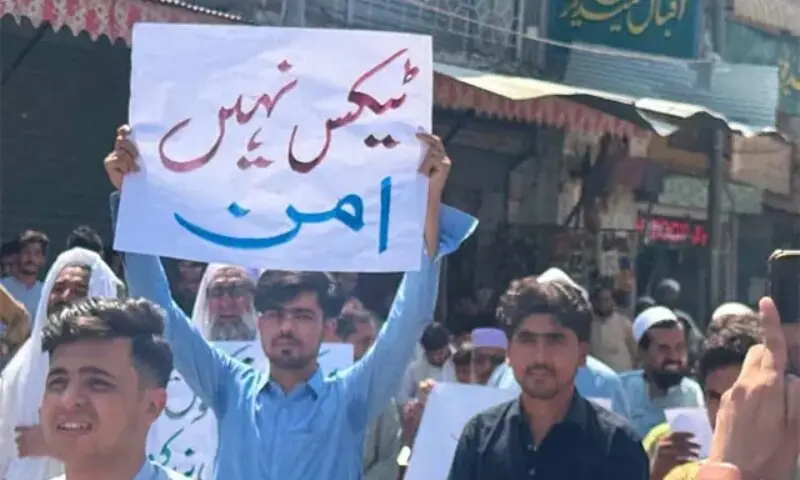
Traders across Malakand division, including Lower and Upper Dir districts, on Saturday announced a complete shutter-down and wheel-jam strike on July 21 to protest the federal government’s proposed imposition of what they described as “unjust” taxes in the region. The protest call was issued by the traders’ community, which said all businesses, including medical stores, vegetable markets, butcher shops and other commercial establishments, would remain closed during the strike. Small and large markets across Lower and Upper Dir will also observe the shutdown. A major protest demonstration will be held in Timergara at 10am, where a large number of traders, political leaders, social activists and members of civil society are expected to participate. The announcement was made during a news conference at the Timergara Press Club on Saturday. The conference was jointly addressed by Malakand Division Traders’ Association Vice President Haji Anwaruddin; Timergara Traders’ Association General Secretary Laiqzada; Timergara Mobile Union President Nasir Shah and General Secretary Shah Zeb; Zeb City Centre President Zahir Shah; Travel and Tours Agents’ Association Chairman Amir Azam Tajak and President Jahan Kabir; Printing Press Association President Ejaz-ul-Haq; Vegetable Market Vice President Fazal Razzaq; and other representatives of the business community. The traders said the proposed taxation would adversely affect both the local population and the business community, making it unacceptable to the people of the region. Reiterating their opposition, the traders’ leaders announced that a complete shutter-down and wheel-jam strike would be observed across Malakand Division on July 21, with all commercial centers in Lower and Upper Dir remaining closed. They appealed to traders, transporters, the general public and people from all walks of life to join the strike and participate in the protest against what they described as the federal government’s unjust taxation policy. They also alleged that such policies have deliberately kept the region economically backward compared with other parts of the country.
KP Government Backlash
A high-level Grand Jirga was convened at the Chief Minister’s House in Peshawar under the provincial government’s initiative to oppose the imposition of federal taxes in the merged districts and Malakand Division. The Jirga was attended by K-P Chief Minister Muhammad Sohail Afridi, Governor Faisal Karim Kundi, provincial cabinet members, senators from the province, provincial presidents and general secretaries of political parties, elected public representatives, parliamentarians from the merged districts and Malakand Division, and presidents of traders’ organizations from these areas. Participants deliberated on various proposals and recommendations against the enforcement of federal taxes. All relevant stakeholders were given the opportunity to present their views and suggestions. Addressing the Jirga, Chief Minister Afridi said the purpose of the Grand Jirga was to evolve a consensus line of action and a unified strategy against the imposition of taxes in the merged districts and Malakand Division. He stated that the K-P government is not levying any taxes in the merged districts and has also decided to withdraw the Sales Tax on Services in Malakand Division. The provincial government’s decision to roll back provincial taxes was taken purely in the public interest, he added. “We are public representatives. The people are our strength and priority, therefore the focus of all our decisions remains public welfare,” the Chief Minister said. Thanking all political parties and leaders for standing with the province on its issues, Afridi noted that the political culture in KP is changing, with all parties uniting on public matters. He announced the formation of a high-level delegation to engage with the federal government. He made it clear that if the federal government does not reverse its decision; all political forces of the province will stand shoulder to shoulder with the people of K-P and wage a joint struggle at every level. “If need be, we will hold protests, and if required, we will go to Islamabad to raise our voice for the rights of the province’s people,” he declared. The Jirga also discussed the law and order situation alongside the tax issue. The Chief Minister revealed that a provincial action plan against terrorism has been prepared, saying that its implementation could restore peace within four months. He announced that a separate Jirga on peace and security would be convened soon to deliberate in detail on measures for establishing peace, the responsibilities of relevant institutions, and required actions.
Taxation Exemption in Malakand Division Through the lens of Political Academia:
Tax exemption in Malakand Division has continued to be one of the most debated constitutional and political issues in Pakistan. For many years, the district loved special tax incentives because of its detailed constitutional status as part of the provincially administered tribal areas (PATA). These exemptions blanketed comfort from many federal taxes along with profits taxes and sales taxes, with the goal of encouraging industrialization, attracting investment, and compensating the region for its historic underdevelopment and losses due to conflict and military activity. The continuation of these incentives even after the amalgamation of the erstwhile tribal territories reflected the nation’s popularity that Malakand required separate monetary guidance during the transition toward full constitutional unity. However, when examined from the perspective of political science and international relations (IR), tax policy should now not be seen as a fixed association. One of the valuable assumptions in political academia is that governance is dynamic as opposed to static. States continuously adjust their policies in response to transforming political, economic, constitutional, and social realities. Institutions are evolving, constitutional arrangements are being restructured, and public regulations are being revised to meet modern challenges. Therefore, guidelines that would once have been appropriate under a certain constitutional framework may no longer remain authoritative or applicable after widespread political and institutional changes. The Malakand Division itself illustrates this style of political development. Before 1969, the place consisted of princely states and tribal areas with formidable administrative structures. After the unification of Pakistan and the subsequent incorporation of Khyber Pakhtunkhwa, Malakand retained a unique constitutional status under the PATA. This reputation justified remarkable criminal and monetary preparations that include tax evasion. However, after the 25th Constitutional Amendment, the abrogation of Article 247, and subsequent judicial and legislative reforms, the constitutional landscape fundamentally changed. Malakand Division is now governed under the same constitutional and administrative framework as the rest of Khyber Pakhtunkhwa. Thus, it is far reasonable for the monarchy to consider whether regulations made for a previous constitutional system should be retained indefinitely. The federal government’s choice to gradually withdraw the tax exemption through successive budgets reflects this transformative governance philosophy. The stated objectives include the establishment of a uniform tax system, the expansion of the national tax base, the reduction of opportunities for tax evasion and the strengthening of financial sustainability. From a universal coverage standpoint, tax credits are generally taken with temporary instruments designed to address specific developmental needs instead of permanent rights. Once the institutional environments are adjusted, governments often reexamine whether such incentives continue to produce the preferred fiscal effects. From an international relations perspective, kingdom legitimacy is strengthened as governments pursue monetary reforms with observed increases in governance and public transportation. Citizens are generally extra inclined to simply accept taxation when they examine corresponding investments in infrastructure, education, healthcare, protection, and monetary opportunities. Therefore, taxation should be considered as part of a broader social contract in which the nation not only most effectively collects sales, but also fulfills its duty to promote inclusive improvement and good governance. A more sustainable technique would be to replace blanket tax exemptions with targeted development regulations. Instead of relying on fiscal welfare indefinitely, governments can inspire investment via commercial zones, infrastructure improvement, vocational training, export product, tourism incentives, digital connectivity, and assistance to SMEs. Such policies are more likely to provide long-term economic competitiveness while gradually integrating the site into the economic framework of the Pakistan comprehensive country.
Conclusion:
The problem of taxation in Malakand Division reflects the broad marriage between constitutional development, governance and monetary coverage in Pakistan. The tax exemptions granted to the region have initially been justified through its special constitutional status under the PATA, its ancient underdevelopment, and the socio-economic losses caused by conflict and military activities. However, following the 25th Constitutional Amendment, the abrogation of Article 247, and the constitutional integration of the vicinity of Khyber Pakhtunkhwa, the political and criminal underpinnings that once supported those exemptions have essentially changed. From the angle of political science and international relations, governance is not always a static phenomenon however a dynamic mode that continuously adapts to transform political, constitutional and economic realities. As the structure of the monarchy evolves, public policy must also evolve. Therefore, the continuation of many-year-antiquarian tax breaks cannot, by itself, serve as a sustainable strategy for the long-term development of the Malakand Division. At the same time, it can also undermine public security and financial growth if you promote tax exemptions without addressing the structural challenges in the immediate environment such as vulnerable infrastructure, limited industrialization, unemployment and the legacy of war. A balanced coverage technique is thus important. Rather than relying indefinitely on blanket tax exemptions or administering taxes without sufficient guidance, authorities need to accompany economic reforms with full investment in infrastructure, education, healthcare, business development, tourism and working hours. Such an approach could strengthen the social contract between the state and its residents, ensuring that taxation is no longer perceived merely as a form of revenue generation but as a tool for inclusive development and progressive governance. The future of the Malakand Division no longer depends on the continuation or abolition of tax exemptions of my own, however, on the State’s ability to blend constitutional equality with powerful development principles. Sustainable progress will be achieved while financial reforms will be promoted with the help of transparent governance, institutional strengthening and inclusive financial opportunities that will enable the people of Malakand Division to absolutely benefit from their integration into the constitutional and fiscal framework of Pakistan.
References:
- Constitution of the Islamic Republic of Pakistan, 1973 (Articles 246&246 https://pakistancode.gov.pk (Official Pakistan Code)
- The Constitution (Twenty-Fifth Amendment) Act, 2018 National Assembly of Pakistan – 25th Constitutional Amendment
- Finance Act, 2025 Federal Board of Revenue (Finance Acts & Tax Laws)
- Finance Act, 2026 Federal Board of Revenue (Finance Acts & Tax Laws)
- Federal Board of Revenue (FBR). Sales Tax Act, 1990 and relevant notifications regarding former FATA/PATA Federal Board of Revenue (FBR)
- Peshawar High Court Judgment on PATA/FATA Tax Exemptions Peshawar High Court Judgment (STR-76-2022)
- Peshawar High Court Judgment on Tax Exemptions after the 25th Amendment Peshawar High Court Judgment (TR-29-2022)
- Sultan–Rome. (2008). Swat State (1915–1969): From Genesis to Merger. Oxford University Press. https://global.oup.com
- Ayesha Jalal. (2014). the Struggle for Pakistan: A Muslim Homeland and Global Politics. Harvard University Press. https://www.hup.harvard.edu
- Douglass C. North. (1990). Institutions, Institutional Change and Economic Performance. Cambridge University Press. https://www.cambridge.org
- Francis Fukuyama. (2014). Political Order and Political Decay. Farrar, Straus and Giroux. https://us.macmillan.com
- David Easton. (1965). A Systems Analysis of Political Life. https://press.uchicago.edu
- Samuel P. Huntington. (1968). Political Order in Changing Societies. https://yalebooks.yale.edu
- Government of Khyber Pakhtunkhwa – Malakand Division Profile Government of Khyber Pakhtunkhwa
- Federal Government’s Phased Withdrawal of Tax Exemptions (July 2026) Dawn – Coverage of Taxation in Malakand Division The Express Tribune – Coverage of KP Grand Jirga and Tax Issue Business Recorder – Finance Act and Tax Reforms