

Writer: Farishta Maqbool (SESA Leader)
When ceasefires exist more in statements than in practice, their ability to protect human life becomes questionable.
On April 8, a ceasefire was announced. It was declared that both Iran and the United States had finally agreed to stop the war in the Middle East. For a few hours, people around the world breathed a sigh of relief, hoping that things might begin to settle and that the war would finally end. But just hours after the peace announcement, Israel launched its deadliest single-day attack on Lebanon since the current ceasefire began. By sunset, 357 people were dead, and a fresh military division had entered the south.
This situation raises concerns, especially since Israeli leaders made it clear that Lebanon was not included in the ceasefire agreement. In contrast, the Prime Minister of Pakistan made an entirely opposite statement, claiming that Lebanon was covered by the ceasefire. This discrepancy leads to questions about which account is accurate. It is unclear whether this is simply a case of confusion or another instance of a fragile agreement that was not upheld. This is not the first time such agreements have been broken.
In this context, questions arise: What does a ceasefire actually mean? Is it truly so fragile that it can be easily violated, or does confusion over the rules make it easier to disregard? And what is the role of the United Nations if it cannot take effective steps to prevent such massacres?
A ceasefire, in an ideal world, means that guns fall silent, bombs stop falling, and fighting ceases so that diplomacy can take over. In reality, however, a ceasefire is often only a temporary pause rather than a permanent solution. Each side frequently uses such agreements to rearm or to take a break before the next round of violence. An agreement can only be effective if a third party is in place to monitor every action and enforce penalties for violations. Without such oversight, a ceasefire agreement is merely a piece of paper. When there is no enforcement and breaking the ceasefire carries no consequences, it becomes easy to disregard the agreement.
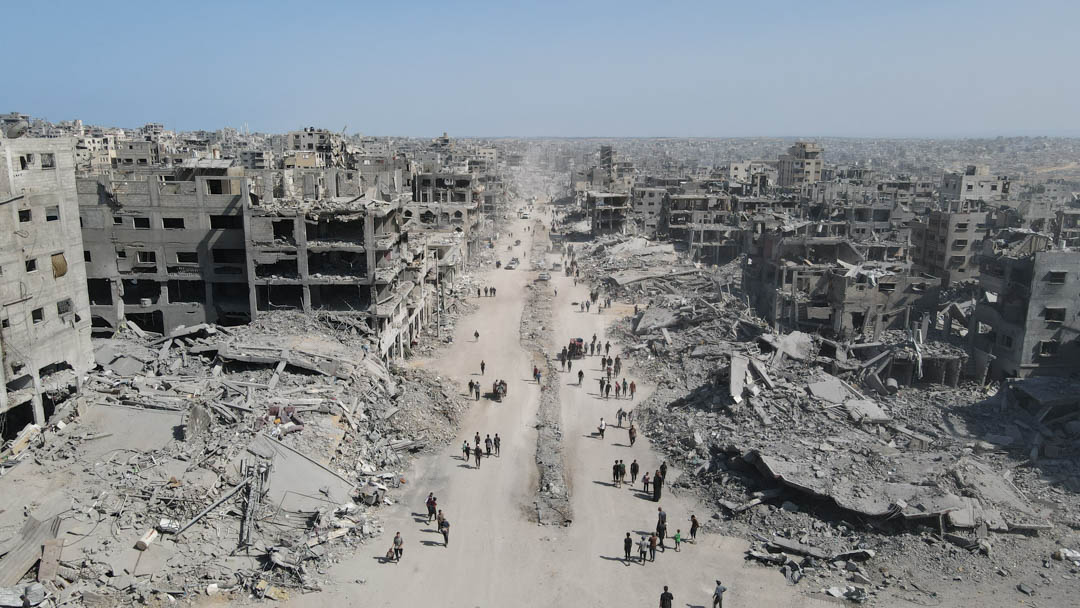
What are the consequences of broken promises? Taking Lebanon as an example, over 1.2 million people have been displaced, including 350,000 children. Many of these individuals are packed into 699 collective shelters or sleep in cars.
This is not the first time such a situation has occurred. History shows a painful pattern. After the 2006 Lebanon War, a UN resolution called for Israel to respect Lebanon’s borders and for Hezbollah to disarm in the south. Yet from November 2024, UNIFIL documented over 10,000 Israeli violations of Lebanese airspace and more than 1,400 military activities inside Lebanese territory. The UN described this as one of the most serious deteriorations since the ceasefire was signed. No one was seriously punished for these violations, leading both sides to conclude that UN resolutions are merely suggestions rather than enforceable laws.
Similarly, in Gaza, a ceasefire was agreed upon in October 2025. However, just a few months later, in April 2026, over 2,400 Israeli violations were documented. These attacks resulted in the deaths of 972 Palestinians and injuries to 2,235 others. A ceasefire was signed, cameras flashed, and yet the violence quietly continued.
In Somalia and Yemen, drone strikes have repeatedly stretched or broken the boundaries of security agreements, leaving civilians dead and local officials humiliated.
Many critics question the UN’s role in these situations and ask what purpose such an organization serves if it cannot stop massacres. The answer lies partly in the fact that the UN Security Council is often paralyzed by the veto power of its permanent members. In the case of Israel, the veto has been used dozens of times to block sanctions that would criticize the country. Moreover, the UN does not have its own army. UNIFIL is just peacemakers, they can’t enforce a ceasefire. Another major hindrance is that powerful countries control the global system. The UN is essentially a club of nations where the most powerful members make the rules. Israel has the support of the world’s strongest power, the United States, which leaves the UN nearly powerless to intervene. Finally, it is worth noting that sometimes a ceasefire is announced not to stop a war but to provide diplomatic cover.
This pattern shows how powerful states can override global peace when their own national interests are at stake. It also raises questions about how international organizations cannot hold accountable for those states that possess veto power, and how fragile the term “ceasefire” becomes when it is used only to allow parties to return later, stronger and better armed.
April 8 serves as a reminder that such agreements are rarely long-lasting. One should not expect that such agreements alone will bring relief to the world. A third party is needed to monitor actions and impose penalties in case of violations. Powerful countries should use their veto power only for the welfare of the world, not for their own narrow interests.
Only such actions can help build a more secure and harmonious global community where lasting peace is not just a dream but a shared reality.