
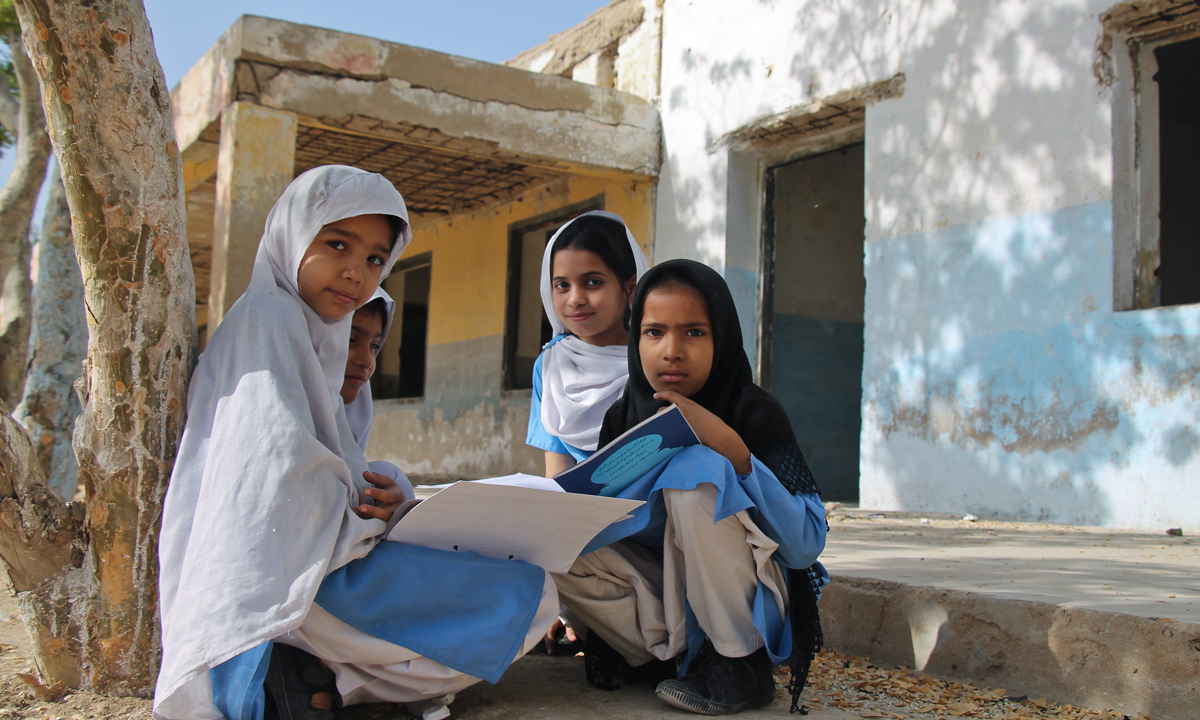
Pakistan’s education crisis: Why south Punjab’s girls cannot wait for better times

Writer: Amna Hassan
Following the disastrous floods of 2022, Pakistan has experienced an increase of 18% in child marriages over the past 6 months. According to Save the Children, families have resorted to marrying off young daughters as a way to survive. An increase in the number of child marriages in South Punjab (Multan, Bahawalpur, and Dera Ghazi Khan) where female literacy is already reported to be only 45-55% indicates a worsening crisis that requires intervention from policymakers immediately.
The statistics are devastating; the Pakistan Institute of Education’s 2024 Report on Girls’ Education shows that in Multan the percentage of literate females is around 55%, while that for males is about 70%. Overall, the level of literacy in the Bahawalpur Division is worse: the overall percentage of people who are literate drops to approximately 45%; and, the percentage of literate females is even lower than this. In rural districts such as Rajanpur and Lodhran, female literacy rates are below 45%, while literacy rates for males are between 60% and 62%. These are pieces of information that should be put in the filing cabinet of the education ministry as they represent millions of girls who have been denied their human right to develop.
When looking at the national figures, it is equally as depressing. According to Pakistan’s Economic Survey for 2024-25, the national literacy for females is 52% and for males is 68%, resulting in a gender gap of 16% that persists in spite of many decades of pledges and commitments regarding policy. Perhaps even more alarming is that 29% of girls have been married to men before they are 18 years old, and 4% of those girls are married to men before they turn 15, according to UNICEF. Following natural disasters, the numbers of girls marrying early will spike dramatically, indicating how vulnerable the ability of girls to access education is.
The Constitutional Mandate We are Ignoring
Article 25-A of Pakistan’s Constitution says all children have the right to “free and compulsory education.” We ratified the United Nations Convention on the Elimination of All Forms of Discrimination Against Women. We pledged to the Sustainable Development Goals. Yet, in South Punjab, these commitments are still undefined abstracts for actual girls who are being left out of school.
There are plenty of laws to provide education to boys and girls. What we have is a wide gap in actually providing for education (in long term) for girls due to both a lack of financial support and a lack of implementation of what laws do exist. One of the only women’s universities located in Bahawalpur is Sadiq College Women’s University (upgraded from a college to a university in 2013, almost 70 years after 1944). This school prepares young women to become teachers, researchers, and leaders; however, it has very little to no funding compared to its needs. Many girls living in adjacent districts are unable to enter school at the secondary level and then never advance to university.
The Economic Case for Investment
Policymakers in Pakistan frequently characterize the education of girls as a fundamental social benefit; however, they overlook the critical economic driver for the education of girls. According to World Bank analysis in 2017, child marriage alone is expected to cost many developing countries (such as Pakistan). In 2030, it could cost trillions of dollars in economic output. This is business-as-usual thinking, and these costs are economically unsustainable.
Research shows that the return on investment for girl’s education is significant and maintained over time. In fact, on average, for each rupee invested in girls’ education, there are approximately 6 rupees in economic returns through lifetime earnings, health benefits, and reduced fertility-related costs. Also, mothers with an educational background typically spend more on their children’s educational expenses. Research also confirms that mothers’ education levels are one of the best indicators of children’s enrolment in primary school. For instance, mothers who have completed secondary education have an increased likelihood of keeping their daughters enrolled in secondary education to the tune of 60 percent. Despite having this knowledge, our budget allocations do not reflect this knowledge. Education’s share of the Federal budget in Pakistan has been around 2%-3% of GDP for decades while Military expenditures are generally 2.5%-3% of total Military
Expenditures. Gender-specific budget allocations within the Education Budget remain below acceptable levels. South Punjab consistently receives much less investment than Northern Industrial Districts of Punjab (despite greater need).
Why Girls Drop out : The data
According to UNESCO research, girls who marry before 18 are more than twice as likely to drop out of school. In many rural districts of South Punjab, only about 13% of girls are still in school by the time they reach grade ten.16 There are multiple and intersecting reasons for this:
Poverty continues to be the most significant obstacle. In Pakistan’s poorest households, 34% of girls marry before 18 compared with only 2% in the richest households. There are also ongoing school fees (despite constitutional guarantees that education is free) in many areas, and transportation costs tend to be high. When you are trying to support a poor family, sending your daughter to school instead of collecting a salary from working in the field is not an option.
The causes and effects of early marriage are also intertwined. Research from development programs has found that families cite “honour protection” as a main reason. One rural Punjab father explained to researchers: “To me having an unmarried daughter at home is a burden. Not because I don’t want to feed her, but because I want to maintain family honour.” Without alternative social paths, marriage becomes a mechanism for coping with precariousness especially after climate-related disasters have put a family’s survival in jeopardy.
Economic and institutional barriers work together to disadvantage the education of girls in a rural area: The schools do not have adequate facilities, including facilities for girls during their menstrual cycle; running water; electricity; adequate security; and female teachers.
Because there is a shortage of female teachers in rural areas, education for girls is unacceptable in traditional settings. The study in the Journal of Contemporary Social Science Research (2025) demonstrates that the lack of female teachers, security and facilities are the three principle reasons for girls not being enrolled in school in South Punjab.
The Policy Solution What works
Evidence-based strategies in South Asia demonstrate the following:
- Financial Incentives: Conditional cash transfers allow for substantial payments to families for sending their daughters to school. Pakistan has some of these programs implemented already; however, they are still not sustainable due to underfunded programs. Areas such as Bahawalpur and Multan are in need of expanded stipend programs as well as transportation assistance to help families transport their daughters to school.
- Infrastructure: South Punjab requires primary schools within the reach of all villages, equipped with functional facilities. The current density of schools is insufficient, causing girls to walk more than 5 kilometers each day to reach school (which prevents them from attending school regularly during monsoon or menstruation).
- Teacher Workforce: Since government Sadiq College Women University trained women are available to serve as teachers, there are still less than half the number of teachers required to meet current demand for female teachers in South Punjab. As a result, it will be crucial to engage in systematic and targeted recruitment and training of female teachers from the communities of South Punjab.
- Preventing Child Marriages: Although the government has enacted a Child Marriage Restraint Act in 2015, it lacks sufficient resources for enforcement. Union councils will require funds for identifying at-risk girls, while community planning especially involving religious leaders has been shown to have a significant impact on decreasing incidences of child marriage. Religious leaders who are knowledgeable about Islam and the teaching of the Quran regarding women’s right to their own education have become leaders and advocates.
- Climate Change Resilience: The recent increase in child marriages that occurred as a result of the flooding demonstrates the profound vulnerability of girls and women due to their absence from the education system. The combination of education and livelihood generating programs provides protection for girls against being married as a result of a natural disaster.
The Political will Question
Commitment is essential to making the implementation happen. The budget should match the priority of the initiative. If girls’ education is a true priority of the state, the amount allocated must be similar to other state commitments. Over the next 10 years this will require several billion rupees of investment a sizable amount, however will generate greater return than the average public-sector investment.
Some contend that the aggressive pursuit of girls’ education may stoke a conservative backlash in the region. This creates a false impression of women living (especially) in South Punjab and underestimates Islam. Research indicates families will invest in their daughters’ education when they are afforded to do so with real choices. The lack of supply as opposed to a lack of demand is what makes this possible.
The Moment
Pakistan has to decide whether to keep making small changes and hope to improve over time or whether it’s time to make a real investment in real change. A real investment in real change means making substantial increases in funding for education; enforcing the rule of law; creating partnerships with communities; and understanding that when women cannot be allowed educational opportunity there can be no economic opportunity for Pakistan, therefore education for girls is essential to the future development of Pakistan.
The girls in South Punjab are showing amazing strength and determination in trying to go to school despite the many barriers they face. As the decision makers of this country, we must remove those barriers. The constitution provides ample legal authority for educational reform. The finances are there for educational reform. We know what policies are best for educational reform.
So what do we need to move forward? Political Will
References
- Save the Children International (2023). “Climate Disasters and Child Marriage in Pakistan.” Report on post-flood child marriage surge.
- Bureau of Statistics Punjab (2014). “MICS Punjab 2014: Literacy and Education.” Government of Punjab, citing Bahawalpur division literacy rates.
- Contemporary Journal of Social Science Review (2025). Vol. 3, No. 4. Study on gender literacy disparities in South Punjab districts including Lodhran and Rajanpur.
- Government of Pakistan (2024-25). “Economic Survey 2024-25: Literacy and Education Statistics.” Federal Ministry of Education.
- UNICEF Pakistan (2024). “Child Marriage Country Profile: Pakistan.” Statistical summary citing national prevalence rates.
- Government Sadiq College Women University (2025). “Institutional History and Development.” GSCWU, Bahawalpur.
- World Bank (2017). “The Economic Imperative of Education: Long-term Costs of Child Marriage.” Development Economics Reports.
- International Labour Organization (2021). “Women’s Economic Empowerment in South Asia.” ILO Regional Office.
- UNESCO (2024). “Global Education Monitoring Report: Gender in Education.” Research on intergenerational education effects.
- Pakistan Bureau of Statistics (2024). “Government Expenditure on Education and Defense.” Federal Budget Analysis.
- UNESCO (2024). “Girls’ Educational Achievement and School Dropout Research.” Global Monitoring Report.
- Global Voices (2025). “Why are girls in South Punjab, Pakistan, still being married off before the age of 15?”
- Child Marriage Data Portal (2025). “Pakistan Country Profile: Prevalence and Determinants.” UNICEF and partner organizations.
- Global Development Blog (2023). “Child Marriage in Pakistan: Evidence from Three Development Programs.” Research on family motivations.
- UN Women Asia-Pacific (2021). “Child Marriage in Pakistan: A Report on Punjab and Khyber Pakhtunkhwa 2020.” Institutional barriers analysis.
- Contemporary Journal of Social Science Review (2025). “Women’s Higher Education Challenges in South Punjab.” Thematic analysis of barriers.
- Government of Pakistan Planning & Development Board (2024). “Development in South Punjab: Educational Infrastructure Projects.”
- Riwaq Al Quran (2025). “Education for Women in Islam: Importance, Obligatory or Forbidden.” Islamic perspective on women’s education with hadith references.
- Global Development Blog (2023). “Child Marriage in Pakistan: Evidence from Three Development Programs.” Research on demand for girls’ education when barriers removed.